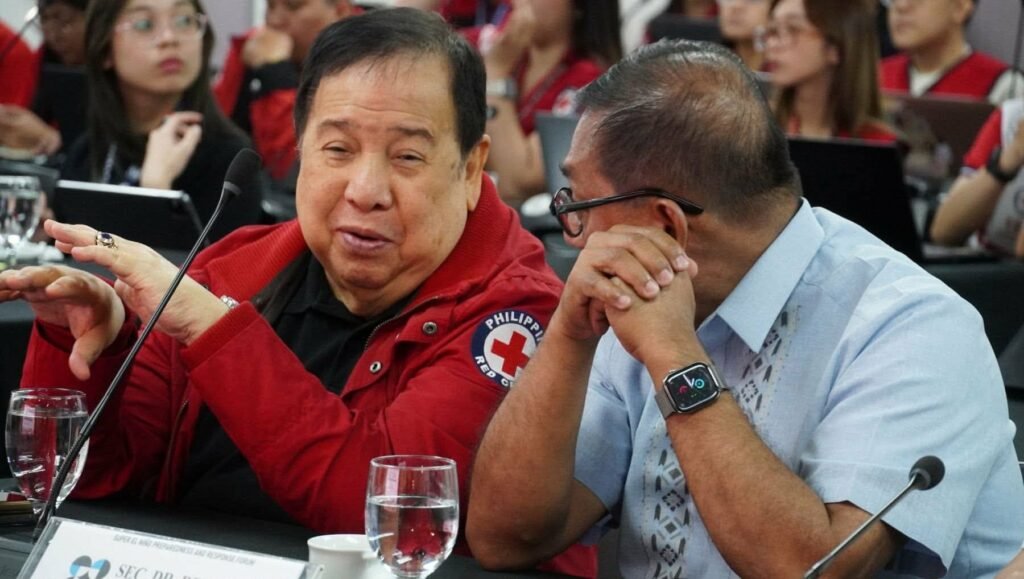

The Philippine Red Cross (PRC), in collaboration with various government agencies, hosts the Strong El Niño Preparedness and Response Forum on October 21, 2026 to discuss government response and strengthen coordination towards developing actionable measures against the severe impact of the Strong El Niño.
The forum was convened by the PRC to tackle ongoing government preparations by different agencies and recognize priority areas needing of assistance amid the extreme heat, drought, and water scarcity brought by the El Niño, in order to establish a concrete preparedness measures and coordination among agencies for its impact that is expected to reach its peak by the end of 2026 and shall persist until the first half of 2027.
Grounded in the PRC’s core values for disaster-preparedness, the 4Ps – Predict, Plan, Prepare and Practice, PRC Chairman and CEO Richard J. Gordon emphasizes that the country should know how to react once the impacts of the Strong El Niño strengthens, emphasizing the importance of community-level preparedness and the PRC’s commitment in providing humanitarian assistance for affected communities. “We need to understand the overall government response, not just the separate plans of individual agencies. This is a partnership. We want to complement government efforts and ensure that assistance reaches communities when they need it.”
In his presentation, Secretary Solidum emphasized that the Strong El Niño does not affect all places in the same way, underscoring the critical role of climate forecasts in disaster preparedness. “A forecast tells us of what may happen. [However], preparedness planning determines what we can do about it, and how we will be affected by the condition of El Niño”, Secretary Solidum stated. “Our goal should not be simply surviving the El Niño, but we should also make sure our livelihood, economic development would not be severely affected by it. ”
PRC Secretary General Dr. Gwen Pang underscores the importance of coordination between the government and humanitarian organizations like the PRC, in order to identify gaps in disaster response and deliver timely relief to affected communities. “We have requested our government partners to have this forum with us, so that we can prepare better. It is good to prepare together with the government [given that] 95% of our country will be affected. We need to work closer before any eventuality will happen.”
Several agencies also presented their disaster preparedness response with each agency detailing its targeted interventions, resource commitments and sector specific strategies to safeguard affected communities from the impact of the Strong El Niño.
Present at the forum were Department of Science and Technology (DOST) Secretary Dr. Rene F. Solidum Jr., Office of Civil Defense (OCD) Deputy Administrator for Operations Assistant Secretary Laurence E. Mina, Department of Health (DOH) Director for Health and Climate Change Dr. Ronald P. Law, Department of the Interior and Local Government (DILG) Undersecretary for Public Safety Jed Patrick E. Mabilog, Department of Social Welfare and Development – Disaster Response Management Group (DSWD-DRMG) Director for National Resource and Logistics Management Bureau Atty. Jun T. Eso, Department of Energy (DOE) Chief for Climate Monitoring and Prediction Section Ana Solis, and Department of Agriculture (DA) Project Development Officer for National El Niño Team Secretariat Engr. Rommel D. Espinosa.
The PRC is committed to providing assistance for communities, individuals affected by the impact of the strong El Niño through its stationed volunteers nationwide, and is closely coordinating with regional partner agencies to monitor local developments. The PRC lines remain open for those in need of help – simply call 143.
Reference: Edison Enriquez