
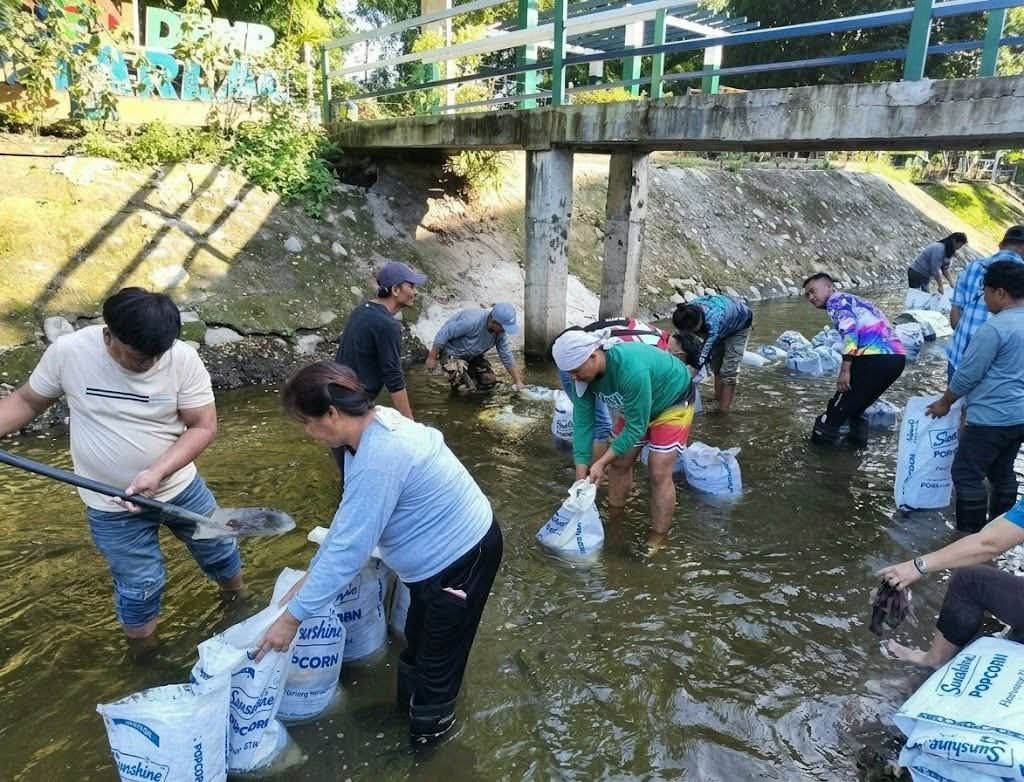

Department of Environment and Natural Resources (DENR) Secretary Juan Miguel “Mitch” Cuna stressed the importance of the restoration of critical wetlands, rivers and coral reefs in protecting communities against the Very Strong El Niño as the agency launched a nationwide ecosystem restoration program to mitigate the impacts of extreme dry heat.
“We are ensuring that our ecosystems remain functional buffers against extreme heat. Protecting our wetlands, rivers, and reefs nationwide is one way of protecting the communities and ensuring environmental survival,” the environment chief said. “By extracting nearly 100 metric tons of waste from Manila Bay tributaries, preserving the delicate hydrology of the Agusan Marsh peatlands, and protecting heat-stressed coral reefs in Masbate and Aurora, we are taking concrete steps to help ecosystems withstand the impacts of El Niño and strengthen the resilience of communities that depend on them,”
In Caraga, the Protected Area Management Office (PAMO) of the Agusan Marsh Wildlife Sanctuary implemented strict ecosystem-based adaptation (EbA) measures to protect peatlands and freshwater wetlands which act as natural sponges that regulate water flow, store massive amounts of carbon, and cool surrounding areas to protect communities and the environment against extreme heat. These included reforesting riparian buffer zones with tree species suited to wetland conditions and monitoring drainage canals to prevent excessive water loss.
In the National Capital Region and Central Luzon, the DENR’s Manila Bay Site Coordinating and Management Office (MBSCMO) intensified river cleanup and waterway maintenance activities under the Manila Bay Rehabilitation Initiative.
In partnership with the Department of Labor and Employment’s Tulong Panghanapbuhay sa Ating Disadvantaged/Displaced Workers (DOLE-TUPAD) program, the MBSCMO deployed River Rangers for a 10-day cleanup operation along river channels, creeks, and estuaries in Pampanga.
The operations removed 98,618.93 kilograms of solid waste, equivalent to 15,267 sacks, from trash traps and riverbanks. Removing accumulated waste helps prevent obstructions, maintain water movement through waterways, and reduce the buildup of debris along tributaries leading to Manila Bay especially during dry conditions.
The MBSCMO also continues to monitor water supply sources, rivers, and creek tributaries in Bulacan, Pampanga, Nueva Ecija, Bataan and Tarlac. It coordinates with concerned government agencies and local government units to help address environmental concerns in these areas.
DENR Region 3 monitors marine heat stress in the coastal waters of Aurora, Bataan, and Zambales to assess conditions affecting marine ecosystems and help protect fisheries from elevated sea temperatures.
In the Bicol Region, DENR-PENRO Masbate identified shallow coral areas and seagrass beds in Mobo and San Jacinto vulnerable to extreme heat. To protect these resources, PENRO Masbate monitors coral bleaching and fish kills biweekly, reporting findings to BFAR, Municipal Agriculture Offices, and DRR offices for coordinated action.
Field personnel cleared blocked waterways to maintain seawater flow through mangrove forests and prohibited boat anchoring and the extraction of marine resources in coral reef areas affected by high temperatures to help these ecosystems recover. They also informed fisherfolk and community groups on the harmful effects of extreme temperatures on marine life.
Reference: Mersha DENR