
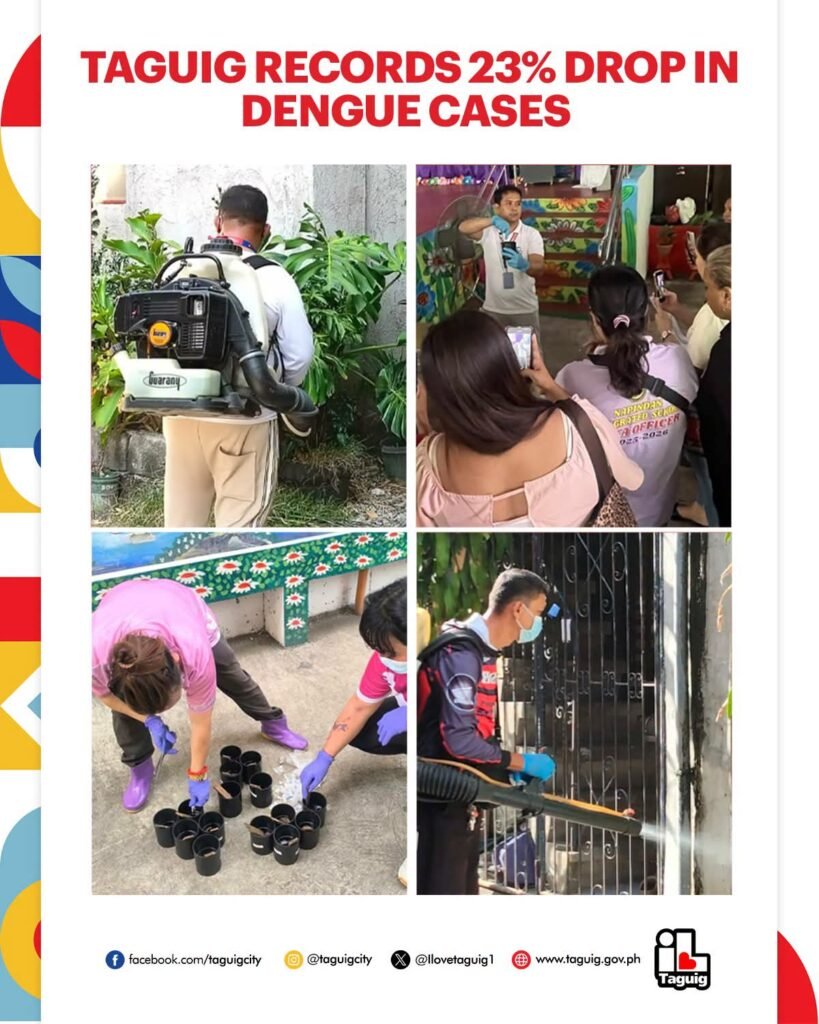

Dengue cases in Taguig declined by 23 percent in the first 40 weeks of 2026, with 2,109 cases recorded from January 1 to October 10, compared with 2,732 during the same period last year.
According to the Taguig City Epidemiology and Disease Surveillance Unit (CEDSU), the city recorded 623 fewer dengue cases this year. One dengue-related death was also reported, equivalent to a case fatality rate of 0.05 percent.
Mayor Lani Cayetano welcomed the decline but reminded residents to remain vigilant against dengue:
“Magandang balita ang pagbaba ng dengue cases sa Taguig, pero hindi ibig sabihin nito ay maaari na tayong maging kampante. Mahalaga pa rin ang pagtutulungan ng bawat pamilya, barangay, at ng ating mga health workers upang maiwasan ang pagkalat ng dengue. Sa simpleng paglilinis ng ating kapaligiran at pag-aalis ng mga lugar na maaaring pamugaran ng lamok, makatutulong tayo sa pagprotekta sa kalusugan ng bawat Taguigeño.”
To sustain the decline, the City Health Office (CHO) has strengthened dengue prevention and control measures through its enhanced 4S strategy, which promotes the elimination of mosquito breeding sites, self-protection, early consultation, and targeted fogging or misting in identified outbreak clusters.
The city has also intensified community- and school-based cleanup drives, mosquito surveillance using ovitraps and larvitraps, and targeted mosquito control operations in high-risk areas.
In health centers, Taguig is reimplementing Dengue Fast Lanes to prioritize patients with suspected dengue and facilitate early assessment, treatment, and referral. The city has also conducted training for school nurses, health workers, and other personnel to strengthen dengue prevention and response.
Schools have implemented dengue awareness activities, mosquito breeding site inspections, and reporting and referral mechanisms for students with suspected dengue.
Meanwhile, the CHO is working with CEDSU to reactivate online dengue case reporting and develop a citywide dengue dashboard for faster monitoring and identification of areas requiring intervention.
Coordination with the Department of Health, barangay officials, schools, and health centers is also being strengthened to support mosquito control operations, disease surveillance, and community education.
Residents are encouraged to regularly inspect their homes, eliminate stagnant water, properly dispose of waste, and seek immediate medical attention when dengue symptoms appear.
Reference: Maricar Brizuela
#ILoveTaguig9