

9 in 10 Filipino parents say children’s social media policies must be evidence-based
Nearly all Filipino parents recognize both the benefits and risks of social media, per the ndings from a recent survey launched Friday. 97% of respondents said that
social media helps their children communicate with family and friends and learn new skills.
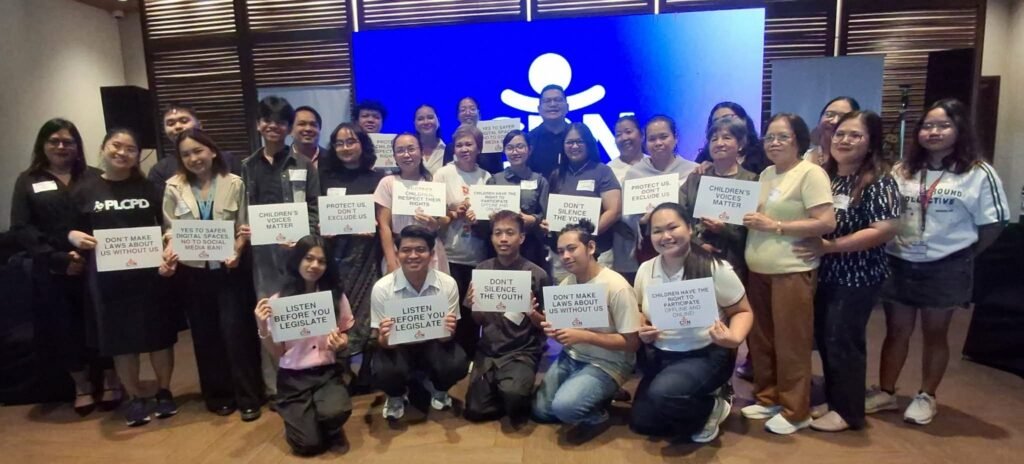
The same study of 1,113 Filipino parents and guardians, presented by public opinion research Momentum Research, found that Filipino parents want policies governing children’s social media use to be grounded in evidence and benet from consultations with children and their families, supporting the Child Rights Network’s (CRN) call for legislators to consider the implications of a blanket social media ban before imposing restrictions on the digital rights of Filipino youths.
“Blanket restrictions may appear like action, but they are not necessarily solutions. Instead of rushing into a ban and completely cutting children ofrom the opportunities the digital world oers, legislators must rst listen to children and their families, strengthen platform accountability, and prioritize safety by design,” said Au Quilala, convenor of CRN and executive director of the Philippine Legislators’ Committee on Population and Development (PLCPD).
“The results of the survey show that instead of restriction, we need to invest in online safety education, raise awareness about the risks or danger, and equip children with skills for them to navigate social media successfully. Children need protection online – but that protection is better realized by equipping children, not by excluding them,” said Ms. Quilala.
Over 9 in 10 respondents also agree that regulations on children’s social media use should be evidence-based, while 8 in 10 believe that policies are more likely to be ineective when families are not consulted. Likewise, 7 in 10 agreed that children should participate in discussions about their social media use.
The survey also raises questions about the eectiveness of stricter age-based restrictions.
“Legislators must also be willing to listen to experts who have studied blanket restrictions in other countries, including Australia, where evidence has shown that children continue to circumvent social media bans – sometimes even with the help of their own parents. A policy this restrictive and drastic risks leaving children behind, undermining their right to participate, and potentially pushing them toward dangerous and unregulated online spaces,” added Ms.Quilala.
While families play an important role in protecting children online, the CRN stressed that the responsibility for children’s online safety must not rest solely on families alone. Government, schools, communities, and digital platforms must work together to address harmful content, exploitative practices, and unsafe platform design.
“Discussions on the Children’s Social Media and Online Gaming Safety Bill, including proposals to ban children from social media, must recognize that keeping children safe online is a shared responsibility. Parents, schools, government, and technology companies all have a role to play.
We have been working with technology companies and other stakeholders to make children’s online experiences safer, but these eorts risk going to waste if a blanket ban is imposed,” said Ms. Quilala.
“We hope our legislators recognize that the long-term solution is to make the internet safer for children, not to keep them out of it. A ban will not make children disappear from social media.They will nd ways to access online spaces and nd community. We should be making the digital world safer for children, not simply making it harder for them to be part of it.
Reference: Mic