

Seven (7) years after the Universal Health Care (UHC) Act was signed into law in 2019, the Department of Health (DOH) continues to translate UHC policies and investments into
accessible, equitable, and quality health services for every Filipino. From an initial 58 Universal Health Care – Integration Sites (UHC-IS) across the country in 2020, it has now reached 114 in 2026—equivalent to 95% of the total number of provinces, highly urbanized
cities, and independent component cities.
UHC-IS consists of provinces and cities establishing their province-wide or city-wide health
systems, ensuring coordinated delivery of health care services across all health facilities—from health centers to hospitals. Because of this, every Filipino, regardless of where they are
in the country, is assured of better protection against catastrophic medical expenses and equal
access to affordable, quality healthcare services.
To sustain these gains, the effective management and utilization of the Special Health Fund
(SHF) are crucial. SHF is the consolidated fund from different sources, including national and local government allocations. This enables local governments to finance priority health
programs, projects, and activities, support the continuous delivery of essential health services,
and ensure that funds are directed where they are most needed. This helps prevent service
disruptions and allows communities to benefit from more coordinated and sustainable
healthcare delivery.
“The success of Universal Health Care is not measured solely by the number of integration sites or the amount of funds pooled in the SHF, but by how effectively these resources are
transformed into accessible, equitable, and quality health services for every Filipino. This
means strengthening primary healthcare, establishing functional referral networks,
improving health facility management, and ensuring that quality health services are accessible, available, and affordable to all.
Through our UNA sa Pagtutulungan, I call on our national and local government and all our health partners to translate our efforts into better healthcare services and improved health outcomes for every Filipino,” said DOH Secretary Edwin Mercado.
Guided by a shared commitment to UHC’s core values and DOH’s Unified National
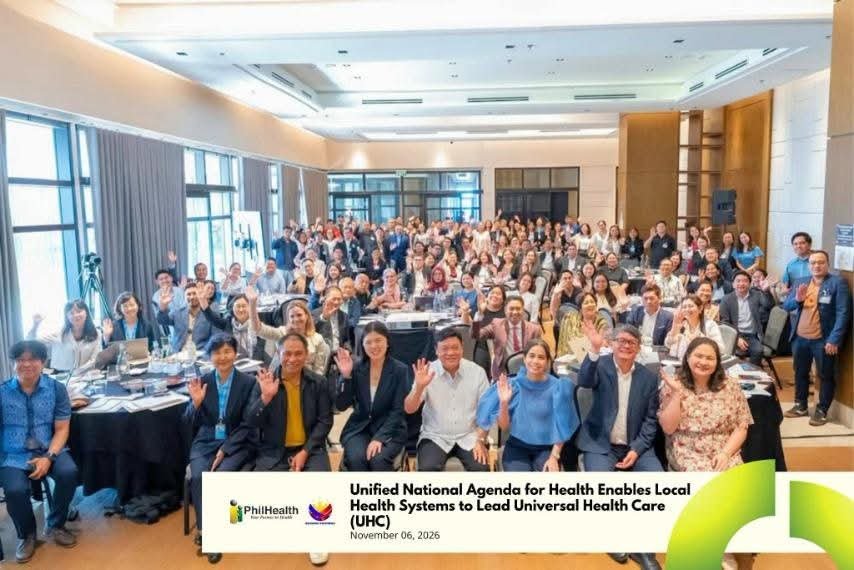
Agenda (UNA) for Health, the DOH, Philippine Health Insurance Corporation (PhilHealth), and local government leaders convened for the 2026 UHC Summit and Strategic Health
Partners Dialogue on November 5-6, 2026.
The events were held in collaboration with the
Union of Local Authorities of the Philippines (ULAP), Provincial Health Officers
Association of the Philippines, Inc. (PHOAPI), and the World Health Organization (WHO)
and were made possible with the support of the Government of Japan, the UHC Knowledge
Hub, and the European Union through the UHC Partnership.
The two assemblies provided a platform to strengthen local leadership and governance for
health, discuss provincial challenges in primary care, refine health financing mechanisms,
strengthen Health Care Provider Networks, and review SHF implementation. It also underscored the importance of aligning national health priorities with local realities and
strengthening coordination among the DOH, PhilHealth, local governments, and other stakeholders.
“We recognize that achieving Universal Health Care requires more than making funds available. These resources must be strategically allocated and effectively utilized to ensure that healthcare services reach every Filipino across the country, especially those in the
Geographically Isolated and Disadvantaged Areas (GIDAs). Through stronger collaboration
with the DOH and Local Government Units (LGUs), we aim to strengthen health financing at the local level, support the delivery of essential health services, and build a more responsive and accessible healthcare system for all Filipinos,” said PhilHealth Acting President and
CEO Dr. Beverly Lorraine Ho.
“The passage of the UHC Act in 2019 signaled a profound shift in the way government views
healthcare. As the State declared its unwavering commitment to protect every Filipino’s
fundamental right to healing and well-being, the law outlined the awesome burden that the entire system would have to bear—from national to local—in the hopes of making health more equitable for all. But in this conversation, we must begin with honesty: policy
frameworks, no matter how well-written, do not automatically guarantee excellent and fair service. There remain a lot of gaps between the promises of the law and the everyday realities that our citizens endure every single day. As local chief executives, we are tasked to
bridge the gap between national healthcare policies and the realities down at the
grassroots,” ULAP Interim President and Quezon City Mayor Joy Belmonte said in her
statement.
Ahead of the summit, health profiles for the country’s 82 provinces were developed to ensure discussions on challenges, solutions and next steps were informed by the latest evidence. The leaders, health officers and partners at the summit jointly identified operational bottlenecks on the ground and opportunities to address them. These efforts aim to ensure seamless service
delivery from local clinics up to regional hospitals.
“Achieving Universal Health Coverage requires strong local leadership, evidence-informed
decision-making and effective use of health resources. Through our support for the
development of 82 provincial profiles, WHO is helping local governments to identify the right priorities for improving health in their constituencies and know the investment gaps that
should be addressed to make faster progress towards Universal Health Coverage. We remain strongly committed to supporting the Philippines in translating UHC commitments into
quality, accessible and affordable health services for every Filipino,” said Dr Eunyoung Ko, WHO Representative to the Philippines.
“PHOAPI stands ready to work hand in hand with the Department of Health, PhilHealth,
local government units, and other stakeholders in translating national health priorities into
concrete actions and measurable outcomes at the provincial and community levels. Together,
we will make UNA a shared commitment, UHC a working reality, and better health for every Filipino our collective achievement,” said Dr. Arvin Alejandro, PHOAPI President
These engagements advance UNA for Health, reinforcing the need for evidence-informed
leadership, effective financial management, and shared accountability between national and
local governments.
Ultimately, the success of UHC will be measured not only by policies adopted or funds allocated, but by whether Filipinos receive quality health services, where
and when they need them, without financial hardship. With sustained partnerships and decisive local leadership, the DOH and its partners continue to advance a health system na
Mabilis, Patas, at Mapagkakatiwalaan para sa bawat Pilipino.
Reference: PhilHealth Media Relation