
STA. ROSA, LAGUNA — The National Dairy Authority (NDA) welcomes ABI Pascual Foods, Inc. as the first private-sector partner in its Private Sector-Funded Milk Feeding Program, demonstrating how corporate participation can simultaneously address child nutrition and create sustainable market opportunities for local dairy farmers and cooperatives.
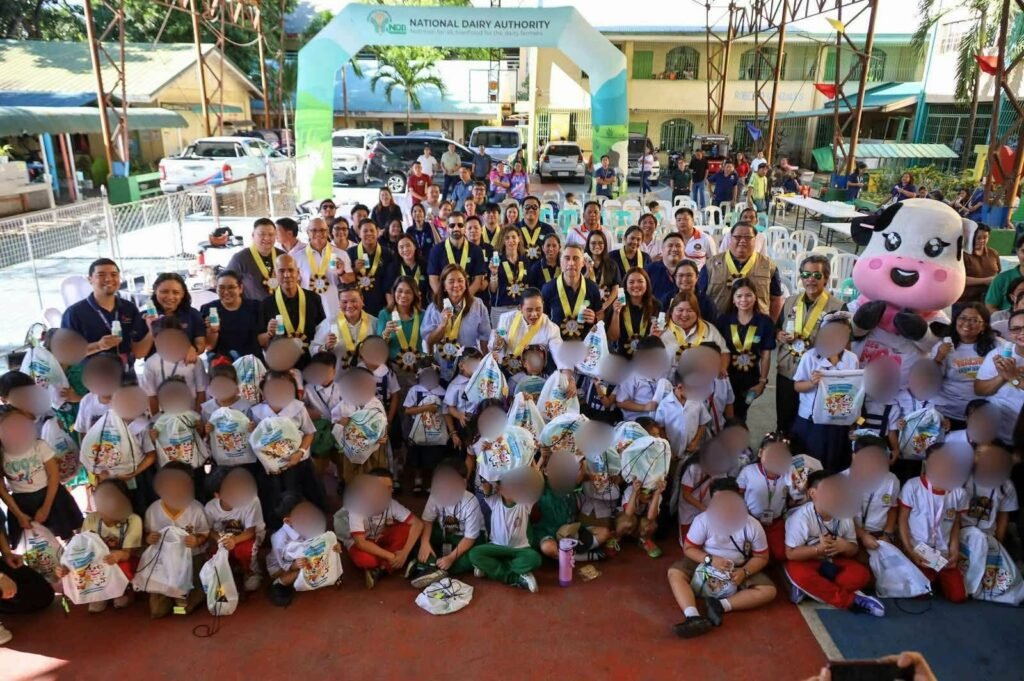
Through the partnership, ABI Pascual is extending its support for daily milk feeding to 504 learners of Malitlit Elementary School in Sta. Rosa, Laguna.
The NDA established the Private Sector-Funded Milk Feeding Program to address the limited market access faced by local dairy farmers and cooperatives by connecting their milk production with the institutional demand generated by school feeding initiatives. By mobilizing private-sector support, the program creates a more predictable market for locally produced milk while helping provide schoolchildren with access to nutritious dairy products.
During the initial 100-day implementation, the program will procure and distribute approximately 10,080 liters of fresh milk, equivalent to 50,400 bottles of 200ml milk. At an estimated procurement price of ₱25 per bottle, this represents a potential sales value of ₱1.26 million for Katipunan ng Kooperatibang Manggagatas, Inc. (KKMI), an NDA-assisted dairy cooperative based in Laguna.
“Nutrition requires consistency to make a lasting difference,” said Javier Palomino, Managing Director of ABI Pascual Foods, Inc. “By expanding our commitment to the program, we ensure that these learners receive sustained nourishment needed to truly thrive in the classroom, while supporting local dairy farmers through more reliable market demand.”
For the NDA, the partnership demonstrates how school-based milk feeding initiatives can serve a dual purpose: improving child nutrition while strengthening the livelihood of local dairy farmers.
Through the negotiated procurement mechanism under the Sagip Saka Act (Republic Act No. 11321), the program facilitates direct purchases of agricultural products from qualified farmers, fisherfolk, and their organizations, subject to applicable requirements.
By linking school feeding requirements with local dairy production, the initiative provides cooperatives with a more predictable source of demand, helping them generate revenue, sustain their operations, and invest in expanding their herds and milk production capacity.
“Connecting school feeding initiatives with direct local procurement under the Sagip Saka Act creates a win-win model for both child health and local agriculture,” said NDA Administrator Atty. Marcus Antonius T. Andaya. “Guaranteed demand from committed private-sector partners like ABI Pascual gives our dairy farmers the economic stability they need to be able to expand their herds and boost local production.”
The NDA considers ABI Pascual’s participation an important milestone in mobilizing private-sector support for the domestic dairy industry. As the program’s first corporate partner, ABI Pascual demonstrates how companies can go beyond traditional corporate social responsibility initiatives by creating tangible economic opportunities for Filipino dairy farmers.
Building on ABI Pascual’s pioneering participation, the NDA is encouraging more private companies to support the Milk Feeding Program and become partners in advancing child nutrition and local dairy development.
Companies can participate by providing financial support for the procurement of locally produced milk, helping expand the program’s reach while generating additional market opportunities for dairy cooperatives.
The initiative builds on a collaborative public-private agreement signed in Makati City, bringing together corporate, institutional, and local government partners. The program is implemented in coordination with the Department of Education (DepEd) and the City Government of Sta. Rosa, which supports the delivery, monitoring, and implementation of milk feeding activities in schools.
“Public-private alliances succeed when every partner brings its core strengths to the table,” Palomino noted. “What we are building at Malitlit Elementary School with the NDA, DepEd, and the Sta. Rosa LGU is more than a feeding program—it is a clear, repeatable blueprint for how corporate resources and public policy can unite to achieve long-term child nutrition and national dairy self-sufficiency.”
“Milk feeding programs help support school-aged children’s growth and development by addressing their nutritional needs, which are essential to learning and reaching their full potential,” said NDA Administrator Andaya. “Through partnerships with the private sector such as ABI Pascual, we can help sustain these initiatives and ensure that more Filipino learners receive the nutritional support they need to grow, thrive, and reach their full potential.”
To further encourage corporate participation, the NDA is highlighting the tax incentives available to donors supporting its Milk Feeding Program, which is included in the government’s National Priority Plan (NPP), as certified by the Department of Economy, Planning, and Development (DEPDev).
Under Joint Administrative Order No. 001-2025 issued by the NDA and the Bureau of Internal Revenue (BIR), eligible donations made to the NDA for its Milk Feeding Program are exempt from Donor’s Tax and qualify for 100% deductibility from the donor’s gross income for income tax purposes, subject to compliance with applicable laws, regulations, and documentary requirements.
The tax incentives provide companies with an opportunity to advance their corporate social responsibility and sustainability objectives while maximizing the value of their contributions to child nutrition, local agricultural development, and Filipino dairy farmers.
Reference:
Ian Caro E. Agbayani
Information Officer IV
National Dairy Authority